
The Prophecy That Broke an Empire of Iron: The Story of Deborah
 Written by Kingdom Kutz Media
The road out of the valley is empty again. It has been empty for twenty years. Whoever built it paved it for wagons and armies, and now it sits unused, grown over, because the men who once walked it free are gone, and the ones who remain know better than to be seen on it.
Nine hundred iron chariots did that. One king, one general, and two decades of Israel learning to live small.
Twenty Years Without a Road
King Jabin of Hazor ruled the north, and his general Sisera commanded an army no one in Israel could answer. Nine hundred chariots of iron rolled through the plains at will. The people who once farmed those fields now scattered to back trails and hill paths, and an entire generation grew up never once watching a man walk the main road without looking over his shoulder.
This is the world Israel cried out from. Not a dramatic collapse, just twenty slow years of a nation forgetting what freedom felt like.
The Woman Under the Palm
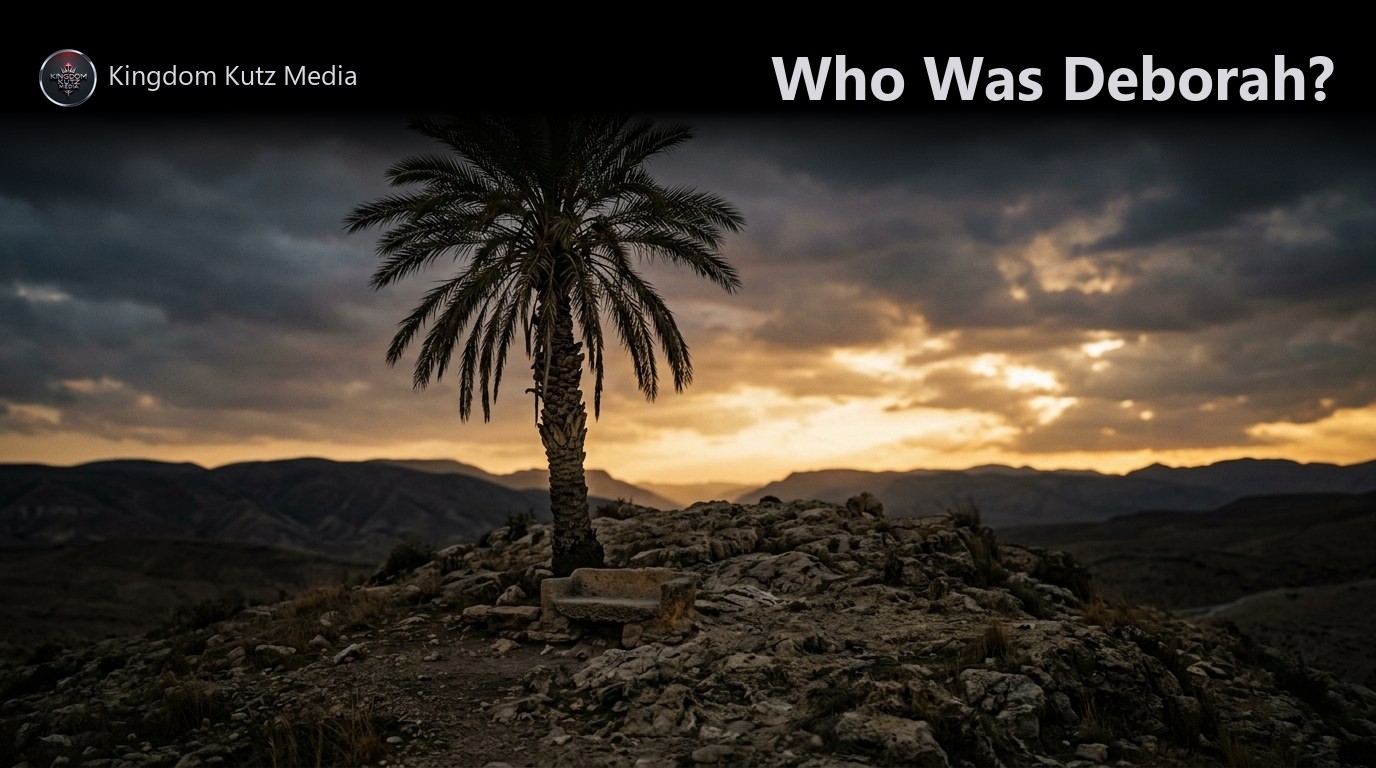
Between Ramah and Bethel, in the hill country of Ephraim, a palm tree marks the place where a woman named Deborah sits. She is a prophetess, and she is judging Israel, though no one appointed her to the post. People simply started climbing the hill to bring her their disputes instead of the elders at the city gates, because what she said kept turning out to be true.
One day the word she carries is not a ruling on a boundary or a debt. It is a battle order.

Take Up the Mountain
She sends for a man named Barak, out of Kadesh in Naphtali, and tells him what the Lord has already commanded. Take ten thousand men. Climb Mount Tabor. God will draw Sisera and his entire army down to the river Kishon and hand them over.
Barak's answer is not the answer of a hero. If you go with me, he says, I will go. If you will not go with me, neither will I. Ten thousand men wait on his word, and he still will not move without her standing beside him.
Deborah does not shame him for it. She agrees. Then she adds the line that decides how the whole story ends: the honor of this day will not belong to him, because the Lord will sell Sisera into the hand of a woman.
And Deborah said unto Barak, Up; for this is the day in which the LORD hath delivered Sisera into thine hand: is not the LORD gone out before thee? So Barak went down from mount Tabor, and ten thousand men after him.Judges 4:14 (KJV)
The Storm at Kishon
Word reaches Sisera that Israel has gathered on the mountain, and he does exactly what a commander with nine hundred chariots does. He brings every single one of them down to the river Kishon. Flat ground. Chariot ground. On paper, the war is already decided.
Then the sky turns. Judges 5 says the stars in their courses fought against Sisera. The clouds break, the river floods, and the same plain that made his chariots unstoppable becomes the mud that swallows them. Sisera climbs down from his own chariot and runs on foot, the only man from his army still standing.
One Tent, One Hammer
He runs until he sees a tent. Heber the Kenite has no covenant with Israel and a peace treaty with Jabin, which makes his camp the one door in the entire valley Sisera believes is safe. Heber's wife Jael comes out to meet him. Turn in, my lord, she says. Fear not.
She gives him milk instead of the water he asks for. She covers him while he sleeps, certain at last that he is hidden. Then she takes a tent peg in one hand and a hammer in the other, and the prophecy Deborah spoke weeks earlier under a palm tree is fulfilled to the letter.

The Window at Hazor
Deborah's victory song could have ended at the tent. Instead it does something almost no war song does. It travels to a window in Sisera's own house, where his mother watches the road and asks why his chariot is so long in coming. Her wise women answer, and she repeats it back to herself because she needs it to be true: they are dividing the plunder, he is bringing home embroidered cloth.
He has been dead for hours. Deborah, who calls herself a mother in Israel, will not let anyone celebrate this victory without seeing exactly what it cost the people who loved the man on the other side of it.
Forty Years of Silence
After the battle, Scripture records something rare for the Book of Judges: the land had rest for forty years. No new tyrant. No fresh uprising. Just four decades of a nation that once forgot what a free road looked like, walking on one again.
None of the people God used to make that happen were the obvious choice. A woman with no army. A general honest enough to admit he was afraid. A foreign wife with no stake in Israel at all. What they had in common was one word, spoken at the moment it mattered most: yes.
Kingdom Kutz Media brings this entire account to the screen in Deborah: Mother of Israel, from the empty road at the start to the storm at Kishon to the tent where it all ends.
Read the full report, with sources, at Kingdom Kutz Media.
Visit our page: https://kingdomkutzmedia.org/
If these stories strengthen your faith, help us keep making them.
Support Our Work


Comments
Post a Comment