
Good vs Evil in the Bible
Good vs Evil in the Bible
The unseen war behind human history is also the battle inside the human heart.

👉 Watch the Animated Story here 👈
👉 Listen to the Audio Podcast here 👈
The world turns good and evil into entertainment. Heroes in capes. Empires in space. Final battles written for the screen.
But Scripture does not treat good and evil like fiction. The Bible pulls back the veil and shows us something far more serious. There is a real battle behind the visible world, and every human heart stands somewhere inside it.
"For we do not wrestle against flesh and blood, but against principalities, against powers, against the rulers of the darkness of this age." — Ephesians 6:12, NKJV
This battle is older than nations, older than thrones, older than the ground beneath Eden.
And it is not only out there somewhere.
It reaches into desire. Into temptation. Into fear. Into the quiet places where a person chooses light or darkness.
Rebellion Before the Garden
Before Adam and Eve stood beneath the trees of Eden, Scripture gives glimpses of a rebellion rooted in pride.
The prophet Ezekiel speaks judgment against the king of Tyre with language that many Christians have long understood as pointing beyond an earthly ruler to the deeper pattern of spiritual pride and corruption.
"You were the seal of perfection, full of wisdom and perfect in beauty." — Ezekiel 28:12, NKJV
Beauty was not the problem.
Power was not the problem.
The fall began when a created being looked at the glory given to him and wanted the throne that belonged only to God.
Isaiah speaks judgment against the king of Babylon, yet the language has often been read as revealing the ancient shape of rebellion itself.
"I will ascend into heaven, I will exalt my throne above the stars of God… I will be like the Most High." — Isaiah 14:13–14, NKJV
There it is.
The heart of evil is not merely violence. It is pride rising against God. It is the created trying to take the place of the Creator. It is the lie that life can be seized apart from the One who gives it.
Rebellion entered the story, and heaven itself became the first battlefield.
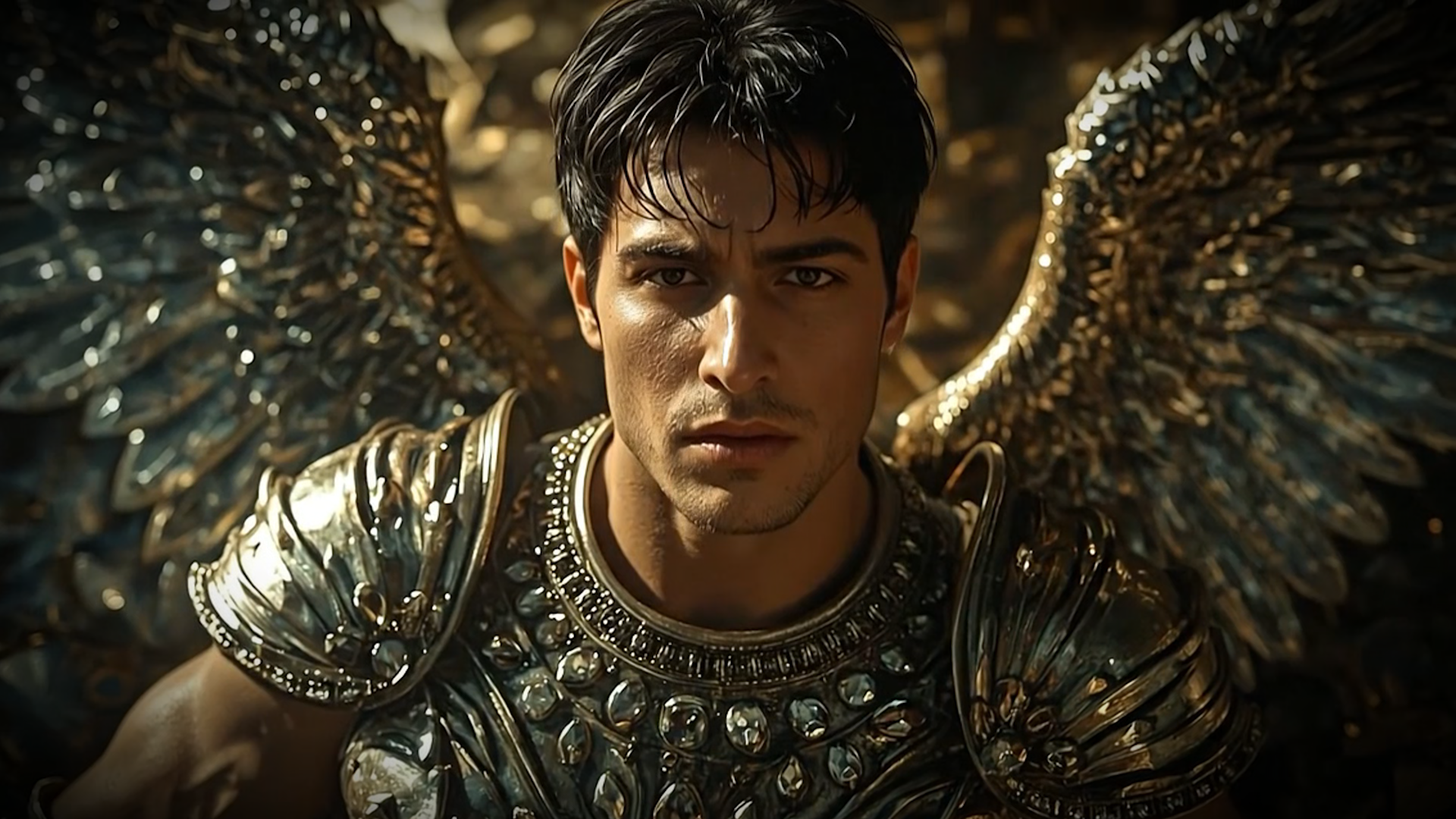
Lucifer stood clothed in beauty and splendor, but pride would turn glory into rebellion.
The Dragon Cast Down
The book of Revelation gives the enemy a name and an image.
He is not a symbol of harmless mischief. He is not a myth made for shadows. Scripture calls him the dragon, the serpent of old, the Devil, and Satan.
"So the great dragon was cast out, that serpent of old, called the Devil and Satan… he was cast to the earth, and his angels were cast out with him." — Revelation 12:9, NKJV
The Bible does not present evil as equal to God. Satan is not God's opposite in power. He is a created being in rebellion, already judged, already defeated in the ultimate sense, yet still dangerous because he deceives, accuses, tempts, and destroys.
Jesus described the enemy's work with terrifying clarity.
"The thief does not come except to steal, and to kill, and to destroy." — John 10:10, NKJV
That has always been his pattern.
Steal what God gives. Kill what God breathes life into. Destroy what God calls good.
And in Eden, he came for humanity.
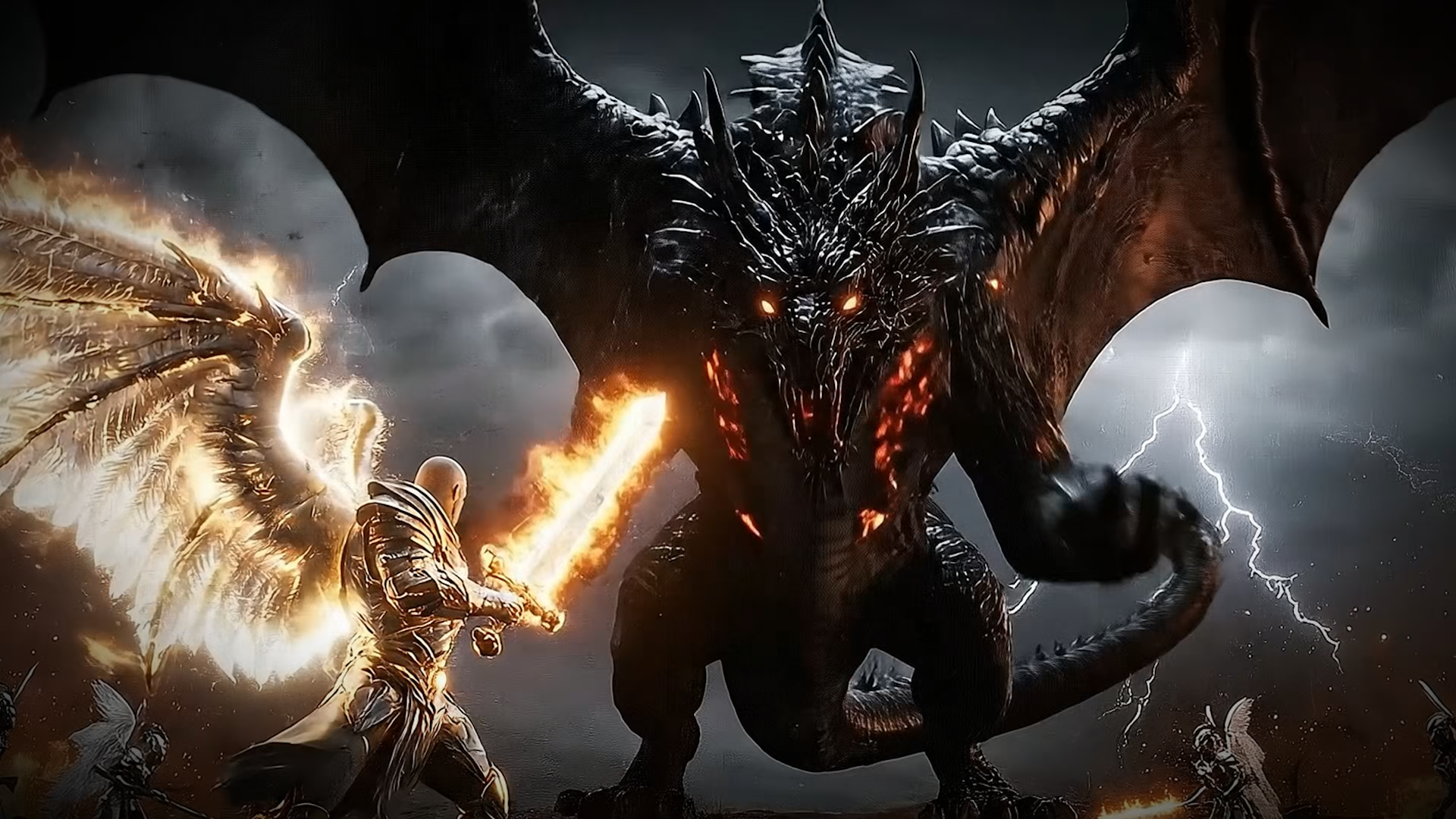
The dragon rose in defiance, but heaven's judgment was at hand, and the rebel was about to be cast out.
The Lie in the Garden
The garden was full of life.
Trees. Breath. Beauty. Command. Communion with God.
Then the serpent entered the scene, not with a sword, but with a question.
"Has God indeed said…?" — Genesis 3:1, NKJV
That was the opening wound.
Before sin touched the fruit, it touched trust. The serpent questioned God's Word, distorted God's goodness, and invited humanity to believe that obedience was bondage and rebellion was freedom.
Adam and Eve listened.
And when sin entered the world, it did not stay private. It spread like a fracture through creation.
"Through one man sin entered the world, and death through sin, and thus death spread to all men." — Romans 5:12, NKJV
Death entered.
Shame entered.
Fear entered.
The first humans hid from the God who had made them.
But God did not abandon the story to the serpent.
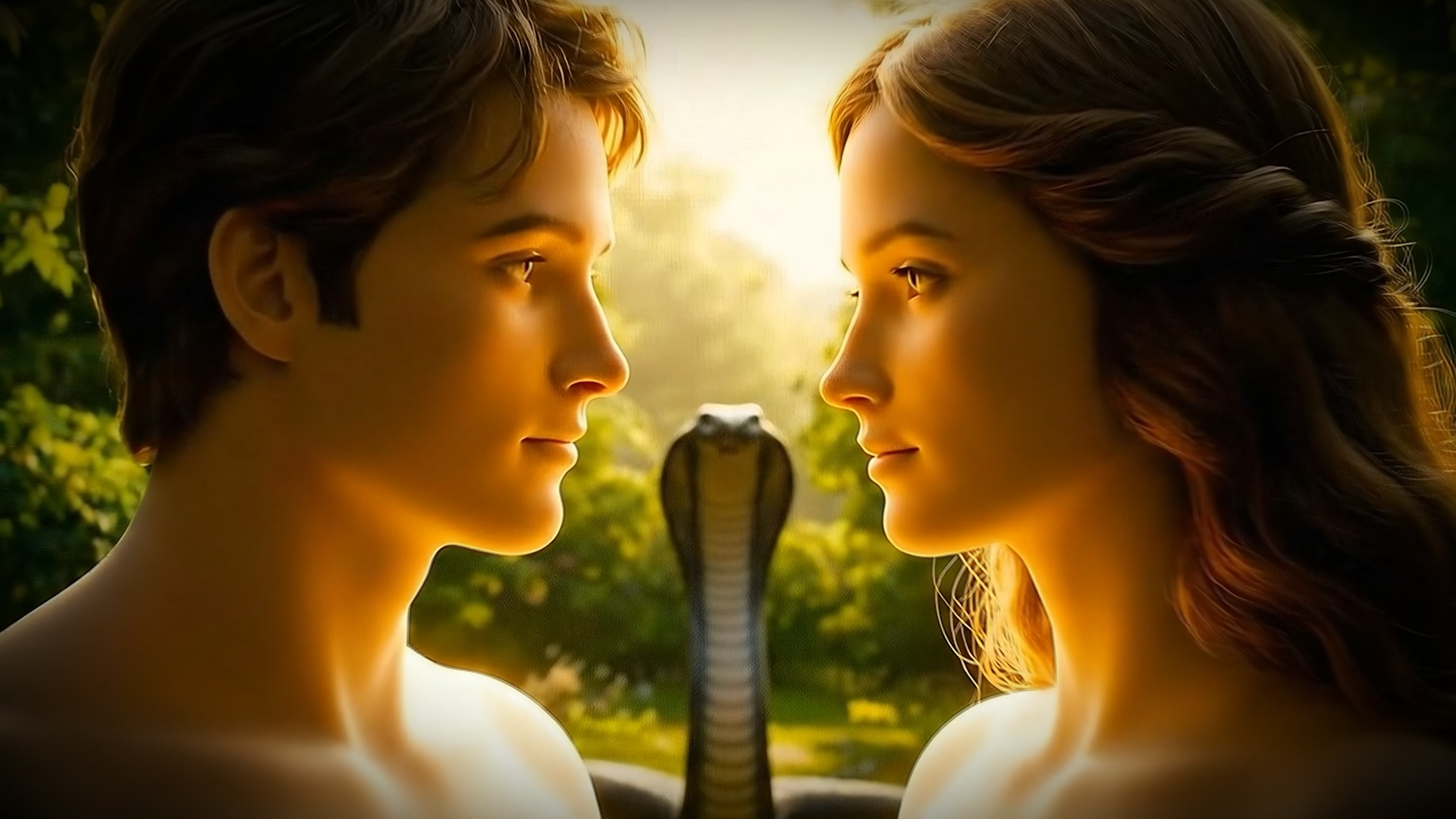
In the Garden of Eden, the serpent questioned God's Word and drew humanity toward the first act of rebellion.
The First Promise of Victory
In the same chapter where humanity falls, God speaks the first promise of redemption.
Judgment falls on the serpent, but mercy begins to shine for mankind.
"He shall bruise your head, and you shall bruise His heel." — Genesis 3:15, NKJV
This is one of the earliest shadows of the gospel.
A wound would come. A crushing would come. The serpent would strike, but he would not win.
From that moment forward, the battle line runs through Scripture.
Cain and Abel. Egypt and Israel. David and Goliath. Prophets and idols. Wilderness temptation. The cross outside Jerusalem.
Good versus evil in the Bible is not a random theme. It is the conflict that runs through the story of humanity, showing again and again that darkness opposes what God loves.
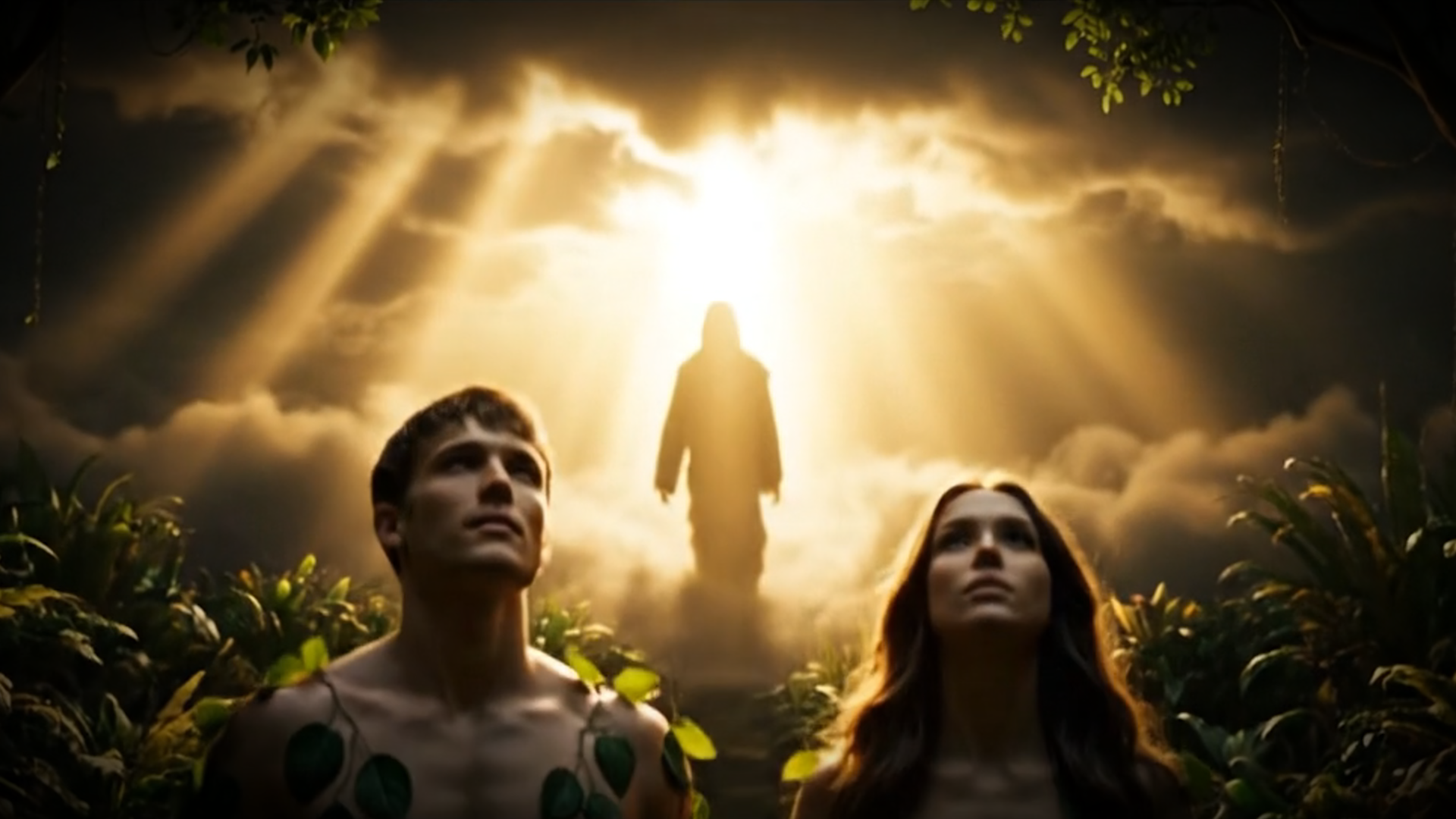
The serpent's strike at the heel was painful, but the crushing blow to his head was decisive and final, fulfilled at the cross.
The Battle Inside the Human Heart
It would be easy to keep evil at a distance.
To imagine it only in tyrants, demons, violence, or obvious darkness.
But Scripture does not let us stand that far away.
The Bible says the battle is also inside us.
"For the good that I will to do, I do not do; but the evil I will not to do, that I practice." — Romans 7:19, NKJV
Paul knew the ache of a divided heart.
Wanting righteousness, yet feeling the pull of sin. Desiring obedience, yet stumbling into the very thing he hated. That conflict is not strange to the Christian life. It is part of living in a fallen world while being called toward holiness.
Galatians describes the same war.
"For the flesh lusts against the Spirit, and the Spirit against the flesh; and these are contrary to one another." — Galatians 5:17, NKJV
This is why the battle feels personal.
Prayer or distraction. Faith or fear. Truth or compromise. Purity or temptation. Forgiveness or bitterness. Light or darkness.
Ignoring the battle does not make it disappear. It only makes a person easier to lead, easier to numb, easier to deceive.
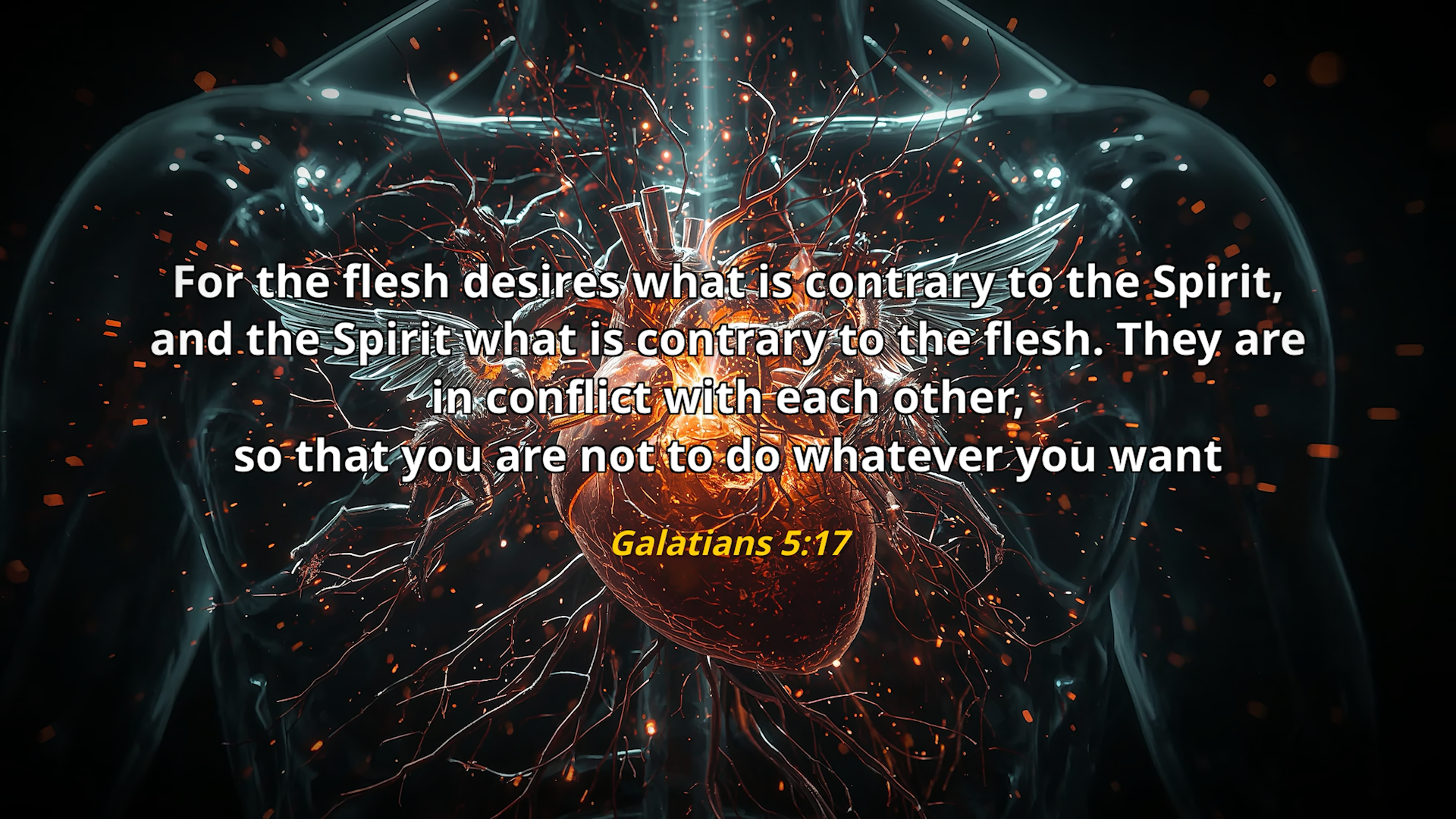
Galatians 5:17 reveals the battle within the human heart: the flesh pulls one way, but the Spirit calls us toward God.
The Armor God Gives
God does not call His people into spiritual warfare and leave them defenseless.
He gives armor.
"Put on the whole armor of God, that you may be able to stand against the wiles of the devil." — Ephesians 6:11, NKJV
Not armor made of iron.
Not weapons built by human pride.
Truth. Righteousness. Faith. Salvation. The Word of God.
Ephesians 6 describes the belt of truth, the breastplate of righteousness, the shield of faith, the helmet of salvation, and the sword of the Spirit, which is the Word of God.
"Stand therefore, having girded your waist with truth, having put on the breastplate of righteousness… above all, taking the shield of faith… and take the helmet of salvation, and the sword of the Spirit, which is the word of God." — Ephesians 6:14–17, NKJV
This is not religious costume.
It is the way believers stand when lies come dressed as wisdom, when temptation feels justified, when fear sounds reasonable, and when darkness tries to rename itself as freedom.
The armor of God is not about pretending we are strong.
It is about standing in the strength of the Lord.
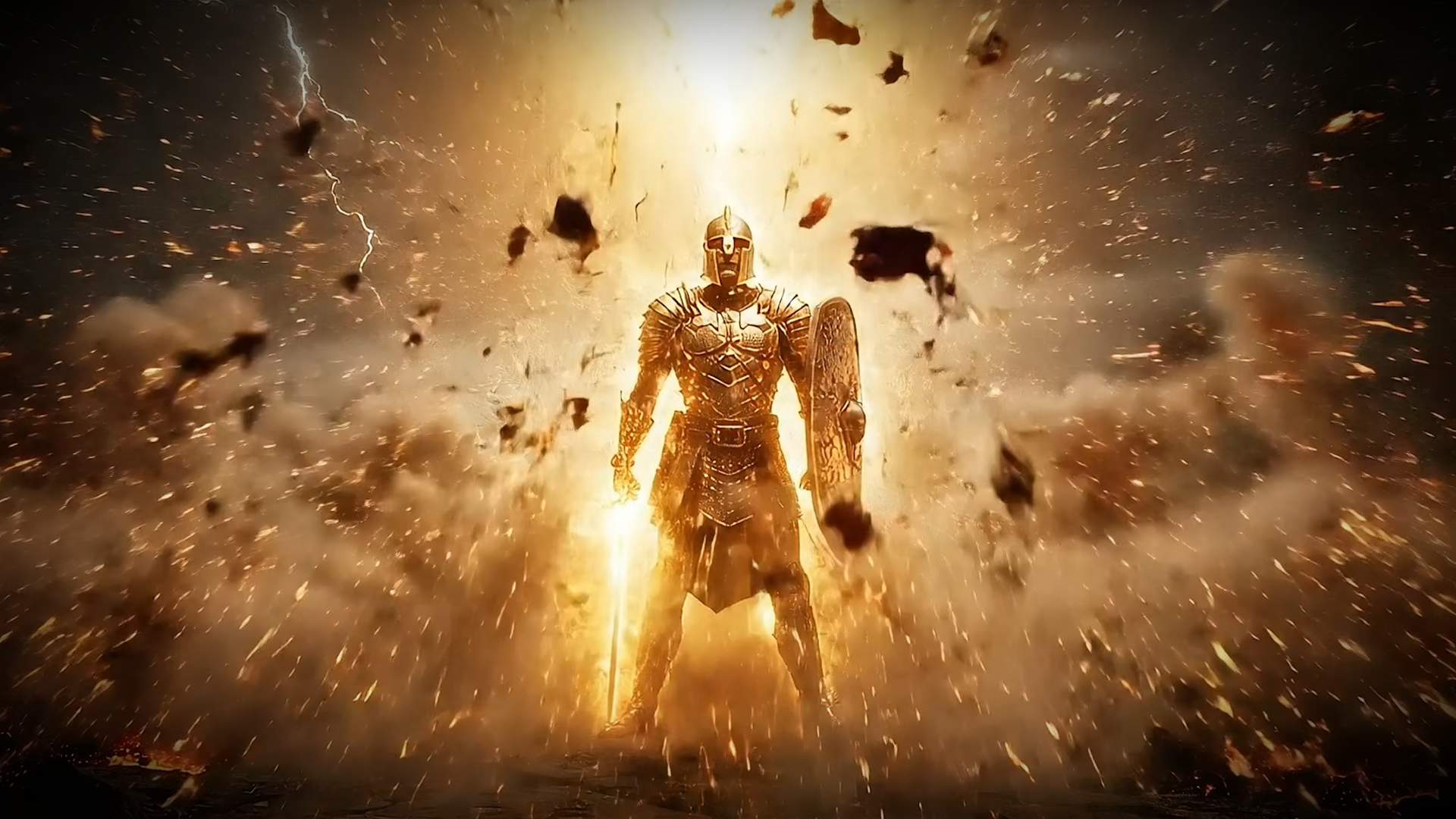
Clothed in the armor of God, stand firm against the powers of darkness — not in human strength, but in the strength of the Lord.
The Cross Was Not Defeat
At first glance, the cross looked like evil had won.
The Son of God was betrayed, beaten, mocked, nailed to wood, and lifted before a watching crowd.
Darkness covered the land.
Hope looked buried.
But heaven was not losing.
Jesus was not trapped.
The Lamb of God was laying down His life.
"It is finished!" — John 19:30, NKJV
Those words were not surrender.
They were victory.
At the cross, Jesus took sin seriously enough to die for it. He loved sinners deeply enough to bear judgment in their place. What the enemy meant for destruction, God turned into redemption.
Colossians says Christ exposed and defeated the powers of darkness.
"Having disarmed principalities and powers, He made a public spectacle of them, triumphing over them in it." — Colossians 2:15, NKJV
Then came the empty tomb.
Death did not have the final word.
The grave did not hold Him.
"O Death, where is your sting? O Hades, where is your victory?" — 1 Corinthians 15:55, NKJV
The ultimate battle has already been won by Jesus Christ.
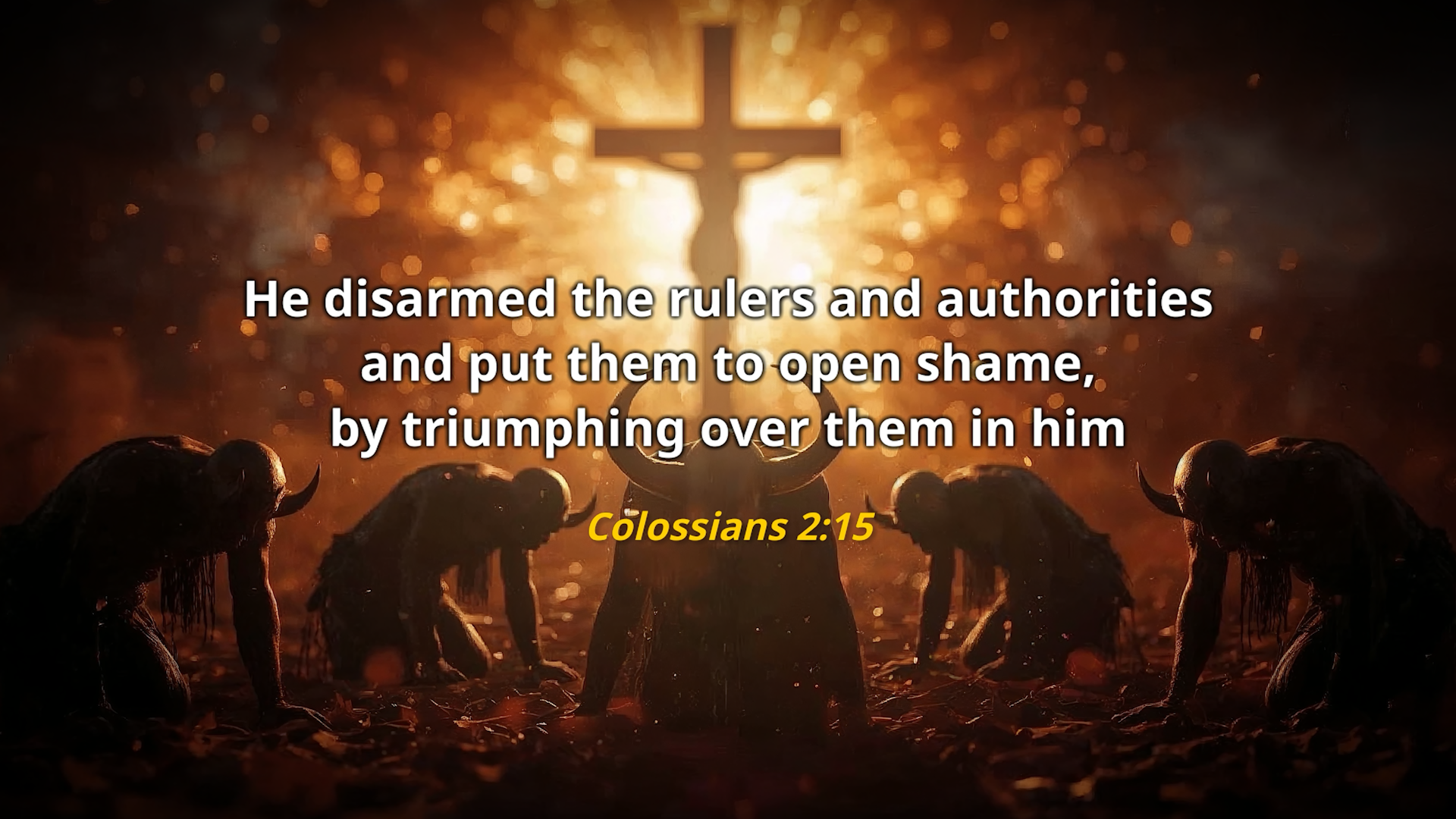
At the cross, Christ disarmed the powers of darkness and triumphed openly over them, turning the place of sacrifice into the place of victory.
The Final Crushing
We still live in a world where evil wounds.
We still see darkness. We still feel temptation. We still grieve. We still resist.
But Christians do not fight for an uncertain ending.
We stand in the victory of Christ while waiting for the day when every enemy is finally put under His feet.
"And the God of peace will crush Satan under your feet shortly." — Romans 16:20, NKJV
The serpent's doom is not a possibility.
It is promised.
The darkness is real, but it is not eternal.
The battle is fierce, but it is not equal.
The victory belongs to Jesus.
What This Means Today
Good versus evil is not only a Bible theme.
It is your story.
Every day, choices are shaping what you love, what you follow, and what you worship. Some choices look small, but they train the heart. Some compromises look harmless, but they open doors. Some temptations look easy, but they lead downward.
Jesus does not call you to walk in darkness.
He calls you to follow Him into light.
"I am the light of the world. He who follows Me shall not walk in darkness, but have the light of life." — John 8:12, NKJV
Evil often looks attractive at first.
It promises freedom without surrender. Pleasure without consequence. Identity without God.
But Scripture warns us where that road ends.
"There is a way that seems right to a man, but its end is the way of death." — Proverbs 14:12, NKJV
The way of Christ may cost you comfort, pride, and control.
But it ends in life.
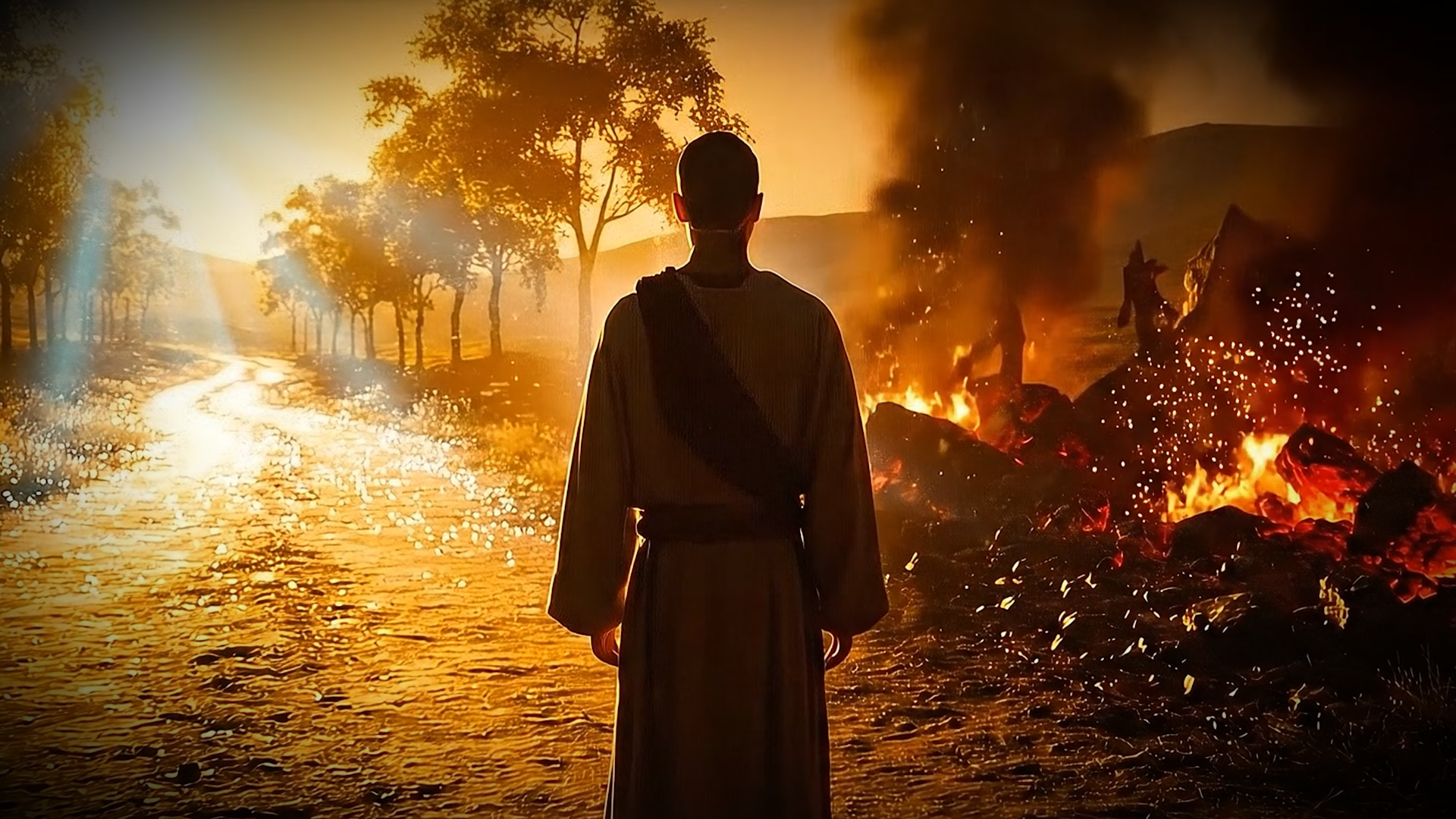
Not choosing is still a choice. Every heart must decide whether it will walk toward the light or remain in the darkness.
Key Takeaways
- Good and evil in the Bible are not equal forces. God is sovereign, and Satan is a defeated rebel.
- The spiritual battle began with pride and rebellion against God.
- The serpent's lie in Eden attacked trust in God's Word.
- Jesus defeated sin, death, and the powers of darkness through the cross and resurrection.
- Believers still face daily spiritual battles, but God gives armor to stand.
- Following Christ is the only path that ends in true victory.
- The fight is real, but the victory is already His.
The question is not whether there is a battle. The question is where you are standing.
Final Thought
The question is not whether there is a battle.
Scripture says there is.
The question is where you are standing.
Jesus has already overcome the darkness. He has already conquered death. He has already given His people the armor they need to stand.
So choose the light.
Choose truth.
Choose Christ.
Because the war is real, the enemy is real, and the victory belongs to the Lord.
👇 Kingdom Kutz Media 👇
Support the Show
If this story moved you, consider supporting Kingdom Kutz Media so we can keep bringing scripture to life:
Follow Kingdom Kutz Media on social media:


Comments
Post a Comment