
Hagar | The God Who Sees Me
Hagar and El Roi: The God Who Sees You in the Wilderness
Before Hagar was rescued, she was seen.
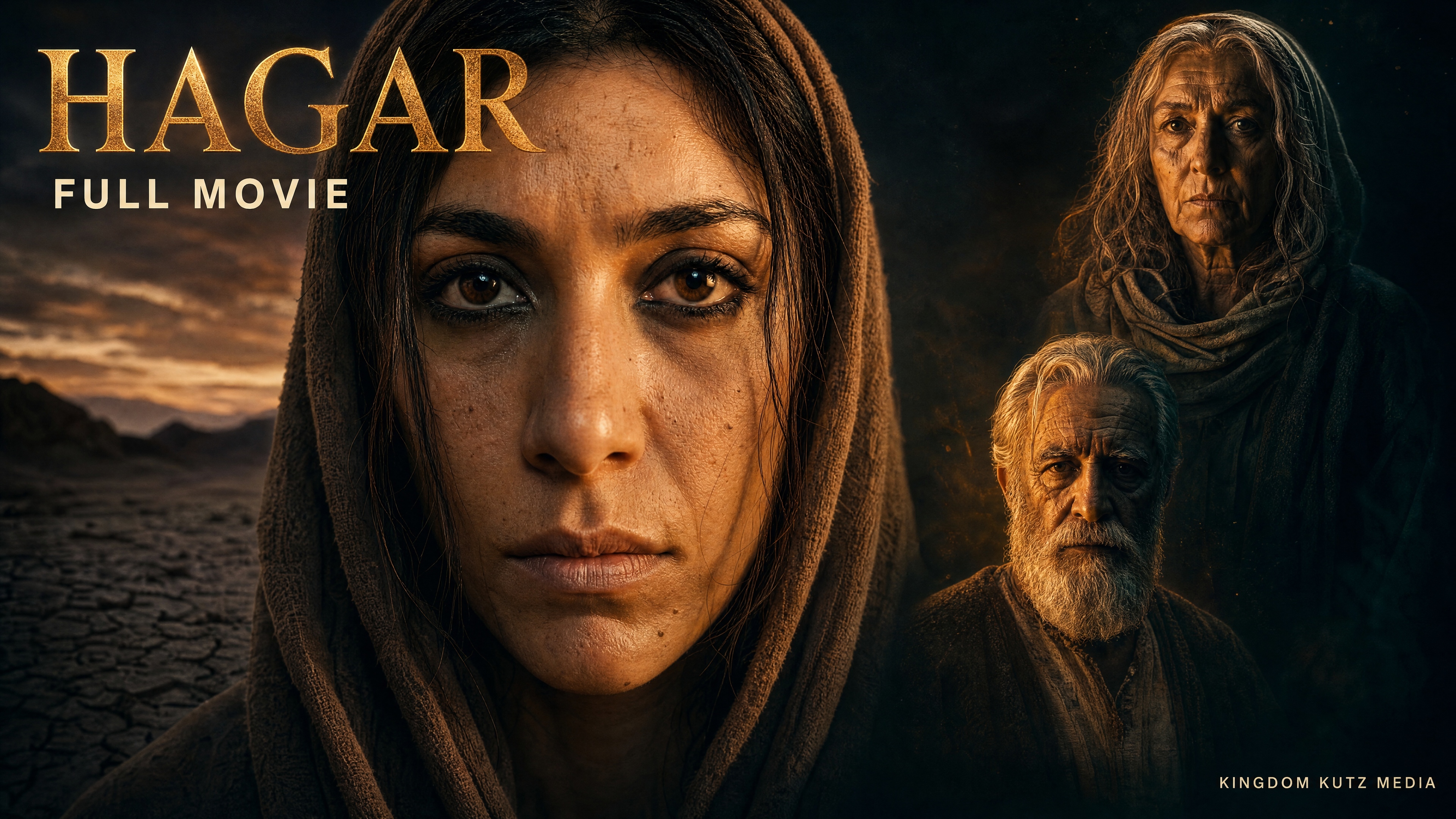
👉 Watch the Animated Story here 👈
The desert does not comfort the abandoned
It does not soften its heat for a woman with nowhere to go. It does not explain why the people who used her could send her away. Hagar walked into the wilderness with a child, a skin of water, and a grief too heavy to carry.
She had been pulled into someone else's promise, someone else's desperation, someone else's plan. But in the silence beyond Abraham's tents, God met the woman no one had centered.
"Then she called the name of the Lord who spoke to her, You-Are-the-God-Who-Sees; for she said, 'Have I also here seen Him who sees me?'" - Genesis 16:13, NKJV
A Servant in the House of Promise
Hagar's story begins in the household of Abram and Sarai.
Sarai had not borne children, though God had promised Abram descendants. Years passed. The promise stood, but the cradle remained empty. In that ache, Sarai turned to a custom of her time and gave Hagar, her Egyptian maidservant, to Abram.
Hagar was not asked what she wanted. She was not treated as the center of the story. She was moved like a piece inside a plan built by people with more power than she had.
And then she conceived.
Suddenly, the servant carried what the mistress could not. The tent shifted. Tension rose. Sarai dealt harshly with her, and Hagar fled.
She ran from the house of promise into the wilderness, away from the voices that had defined her by usefulness, pregnancy, and position. But God followed her into the place where no one else did.

Hagar — Genesis 16 and 21, 2000–1800 BC, Canaan.
God Found Her by the Spring
"Now the Angel of the Lord found her by a spring of water in the wilderness, by the spring on the way to Shur. And He said, 'Hagar, Sarai's maid, where have you come from, and where are you going?'" - Genesis 16:7-8, NKJV
The first word God speaks to her is her name.
Not servant. Not problem. Not outsider.
Hagar.
That name must have landed like water on cracked ground. Heaven knew who she was. Heaven knew where she had come from. Heaven knew what had happened inside the tents. The wilderness had not erased her. Her pain had not hidden her from God.
God did not pretend her life was simple. He gave her a hard command to return, and He gave her a promise. Her son would live. His name would be Ishmael, because the Lord had heard her affliction.
Before Hagar held the child in her arms, God named him with mercy.
And Hagar named the Lord.

God found Hagar by the spring when the wilderness had nearly swallowed her hope.
El Roi: The God Who Sees Me
Hagar called Him "The God Who Seest Me."
That is the beauty of El Roi. It is not the idea of a distant God glancing down from heaven. It is the living God seeing a wounded woman in the wilderness with knowledge, presence, and care.
He saw her body. He saw her tears. He saw the pressure placed upon her. He saw the silence around her suffering.
And He spoke.
Hagar's revelation did not come in a palace. It did not come from a throne room on earth. It came beside a spring in the wilderness, where a woman with no protection discovered that she was not invisible to God.

Hagar's revelation did not come in a palace - it came in the wilderness where she thought she was alone.
The Second Wilderness
Years later, Hagar would enter the wilderness again.
Isaac had been born to Sarah. Conflict rose again in Abraham's household. Hagar and Ishmael were sent away with bread and water, and when the water was gone, Hagar placed the boy under a shrub.
She could not bear to watch him die.
That is one of the most painful images in Genesis. A mother sitting at a distance because love cannot endure the sight of the child suffering.
But the God who saw her by the spring was still the God who heard in the desert.
"And God heard the voice of the lad. Then the angel of God called to Hagar out of heaven, and said to her, 'What ails you, Hagar? Fear not, for God has heard the voice of the lad where he is.'" - Genesis 21:17, NKJV
Again, God calls her name.
Again, heaven interrupts despair.
Then God opens her eyes, and she sees a well of water. The mercy was there, but she could not see it until God revealed it.

Hagar wept in the wilderness, unable to bear the thought of watching Ishmael die.
What This Means Today
Hagar's story still speaks to the person who feels used, overlooked, rejected, or sent away.
It speaks to the one who has been defined by what they could provide. It speaks to the one who has survived rooms where their pain was not considered. It speaks to the one who wonders if God notices the details no one else asks about.
El Roi means your suffering is not unseen.
God sees the tear you hide. He hears the cry you cannot shape into prayer. He knows where you came from, where you are sitting now, and where fear says your story will end.
Hagar did not find God because she was strong. God found Hagar because He is merciful.

God found Hagar because He is merciful and His mercy still finds the forgotten today.
Key Takeaways
- God saw Hagar when people treated her as secondary.
- God called Hagar by name in the wilderness - not servant, not outsider, but Hagar.
- God heard Ishmael and provided water when hope was almost gone.
- El Roi reminds us that no one is invisible to the Lord.
- The wilderness is not beyond the reach of God's mercy.
The world may overlook the wounded, but El Roi sees them by name.
Final Thought
Hagar walked into the wilderness carrying rejection, fear, and a future she did not choose. But she did not walk there alone.
The God of Abraham was also the God who saw an Egyptian servant. The God of the promise was also the God of the outcast. And the God who opened her eyes to water still opens eyes today.
Whatever wilderness you are sitting in right now, El Roi has not looked away.
Hagar: The God Who Sees the Forgotten
Support the Show
If this story moved you, consider supporting Kingdom Kutz Media so we can keep bringing scripture to life:
Follow Kingdom Kutz Media on social media:


Comments
Post a Comment