
Sodom and Gomorrah: The Cost of Looking Back When God Says Move
How Abraham's pleading, Lot's hesitation, and one fatal glance still speak to anyone God is calling out of darkness
Written by Kingdom Kutz Media

Darkness settles over the valley like a sentence already handed down.
Abraham stands beneath the stars, and this isn't idle wondering — it's the moment a man realizes something has shifted in the spiritual realm. Below him, Sodom carries on in its noise, its appetite, its cruelty, its arrogance. The city has no idea its own outcry has already reached the throne room of God.
The account unfolds across Genesis 18 and 19, early in the Old Testament, and it remains one of Scripture's most unflinching portraits of judgment, intercession, rescue, and what it costs to refuse letting go of a life God has already condemned.
"Then the LORD said, Because the cry of Sodom and Gomorrah is great, and because their sin is very grievous; I will go down now, and see whether they have done altogether according to the cry of it." — Genesis 18:20–21
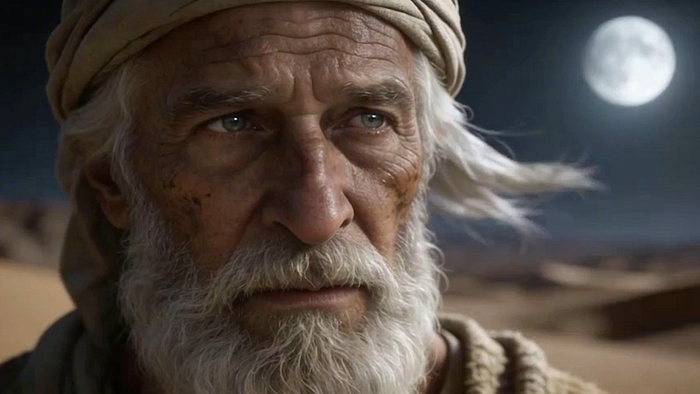
Abraham stands under the moonlit sky as the cry of Sodom reaches heaven and the weight of God's coming judgment settles over him.
Why Abraham Was Let In On Heaven's Verdict
Long before fire touched the ground, God let Abraham stand at the edge of the coming judgment.
That detail alone deserves a pause.
Abraham wasn't informed because the Lord needed his input. He was informed because closeness with God comes with weight. The nearer someone walks with the Lord, the more they feel the gravity of sin, the holiness behind the judgment, and the mercy that holds back longer than anyone has earned.
So Abraham approaches — bold, but trembling. There's no posturing in him. He knows exactly what he is: dust before the Creator. And yet he also knows exactly who he's talking to.
"Shall not the Judge of all the earth do right?" — Genesis 18:25
That isn't defiance. That's faith, pressing through tears.
Abraham starts negotiating, if it can even be called that. Fifty righteous people, will the city be spared? Forty-five? Forty? He keeps going, down to ten.
He isn't wearing down God's justice. He's uncovering just how far God's mercy reaches.
The Lord agrees: ten righteous people would be enough.
Ten cannot be found.
The city has already decided who it is. Heaven has already answered.
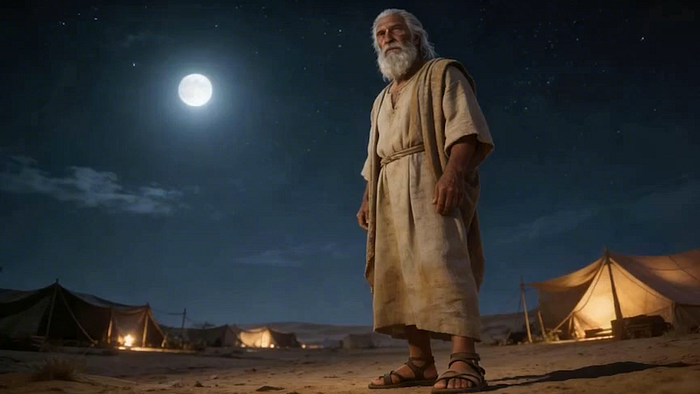
Abraham stands beneath the night sky, carrying the weight of God's warning before judgment falls on Sodom.
Two Strangers, One Dangerous City
By evening, two messengers reach Sodom.
Lot is seated at the gate and spots them. He stands, bows, and insists they stay under his roof for the night — he knows this city well enough to understand exactly how unsafe it becomes once the sun goes down.
He welcomes them in. Feeds them. Shelters them.
But outside, what's gathering in the dark isn't only the absence of light. It's the city showing exactly what it has become.
Before the night ends, a mob surrounds Lot's house. Genesis doesn't soften the description — it's widespread, brazen, violent. They demand Lot hand over his guests. Lot steps out, trying to reason with people who no longer fear God, no longer respect innocence, and no longer bother concealing what they want.
The messengers pull Lot back through the door and strike the crowd outside with blindness.
The door shuts.
Mercy has just drawn a line between Lot and the mob. Judgment has just confirmed everything about the city.
A Warning Nobody Wanted to Hear
Inside the house, urgency takes over.
Lot has to leave. His family has to leave. The city's time is up.
"For we will destroy this place, because the cry of them is waxen great before the face of the LORD." — Genesis 19:13
Lot rushes to warn the men set to marry his daughters. Destruction is coming.
To men who love what the city offers, it sounds absurd.
This is one of the most unsettling threads in the whole account. Judgment can be standing at the door, and the human heart can still shrug it off. Mercy can be sounding every alarm it has, and people can still hear it as background noise.
They don't move.
They don't turn back to God.
They don't take it seriously.
By morning, even Lot is still dragging his feet.
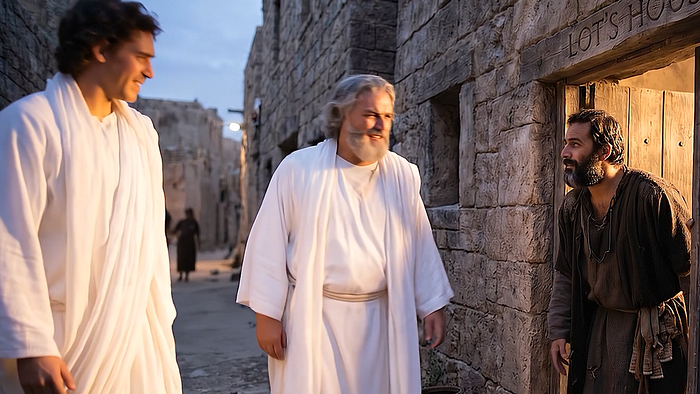
Lot warns his cousin in the streets of Sodom, urging him to flee before God's judgment falls.
When Mercy Won't Let You Stay
The sun comes up over Sodom, and Lot still hasn't left.
He heard the warning. He watched the mob go blind. He knows these aren't ordinary visitors. And yet his feet barely move away from the only life he's built.
Genesis isn't kind to him here. This isn't a hero's exit. It's hesitation.
So mercy steps in and does what Lot won't do for himself.
"And while he lingered, the men laid hold upon his hand, and upon the hand of his wife, and upon the hand of his two daughters; the LORD being merciful unto him."
— Genesis 19:16
That line carries the whole story.
The Lord being merciful unto him.
Lot is physically pulled out. So is his wife. So are his daughters. None of them are rescued because they've fully grasped the mercy being extended to them. They're rescued because God chose to be merciful.
Sometimes grace doesn't wait around for you to get it together. Sometimes grace simply takes your hand and pulls you out of the fire.
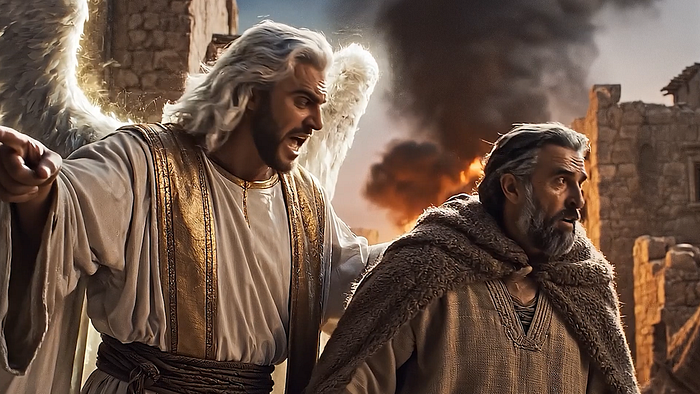
An angel urges Lot to flee as smoke rises behind them, warning that Sodom's final hour has come.
The Command Was Simple
"Escape for thy life; look not behind thee, neither stay thou in all the plain."
— Genesis 19:17
Don't look back.
Don't stop anywhere in the valley.
Run for your life.
Every step away from Sodom is a step out of judgment's reach. Every breath is mercy they didn't earn. The old life is behind them now — survival depends on staying in motion, facing forward.
But Lot's wife slows down.
Genesis gives us a single sentence about it. Short. Devastating.
"But his wife looked back from behind him, and she became a pillar of salt."
— Genesis 19:26
One glance.
That's the entire record.
But that glance reveals something far deeper than curiosity. Her feet were walking away from Sodom, but her heart hadn't left yet.
Mercy had physically pulled her out — but she turned her eyes back toward what God was tearing down.
That's the warning embedded in this verse.
Not every backward glance is harmless. Sometimes it exposes exactly what still has a hold on someone's heart.
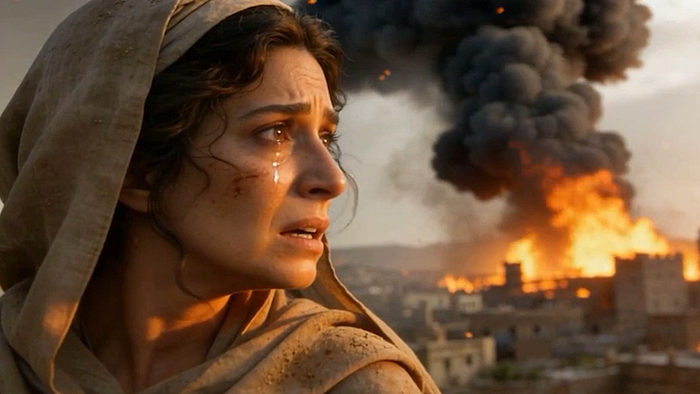
Lot's wife turns her eyes back toward Sodom, caught between mercy ahead and the life she could not release behind her.
When the Sky Itself Becomes Judgment
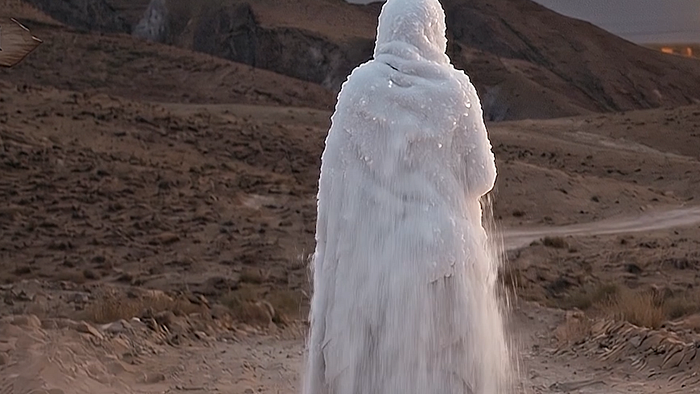
Lot's wife becomes a pillar of salt after looking back toward the life God told her to leave behind.
Then the fire comes down.
Sulfur and flame pour over Sodom and Gomorrah. The cities of the plain crumble under a verdict that's holy, not random. Homes, walls, voices, fields — everything that stood in defiance of God collapses.
Genesis never frames this as chance disaster. It's judgment.
Not impulsive. Not careless. Not unfair.
The outcry had already reached heaven. Abraham had already pleaded. Mercy had already waited. The messengers had already warned them. Lot had already been dragged out by the hand. The command had already been given.
Then God's patience reached the point He'd already appointed.
When the Judge of all the earth opens the books on a city, nothing hidden in the dark stays hidden.
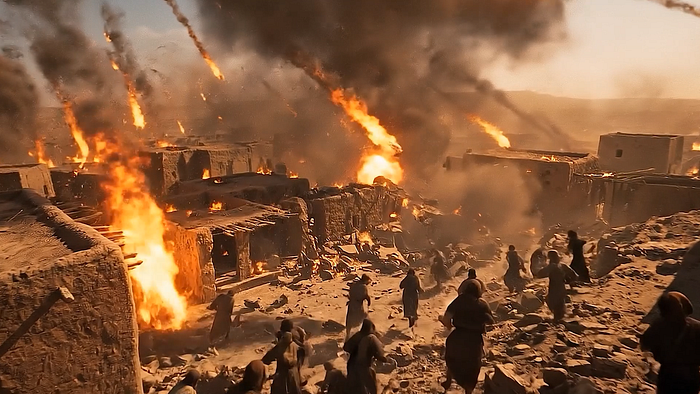
Fire falls from heaven over Sodom as the city collapses beneath the holy judgment of God.
Smoke Where a City Used to Be
At sunrise, Abraham returns to the place where he had stood before the Lord the day before.
He looks out toward Sodom and Gomorrah. Smoke is rising off the valley like smoke from a furnace.
There's no celebration in this moment. No triumph. Just the stillness that follows after holy judgment has finished its work.
Abraham had prayed. He had pleaded. He had trusted that the Judge of all the earth would act justly.
And looking at the smoke, he sees that justice was carried out in full.
But Genesis doesn't close the account on smoke alone.
"And it came to pass, when God destroyed the cities of the plain, that God remembered Abraham, and sent Lot out of the midst of the overthrow."
— Genesis 19:29
God remembered Abraham.
Because of that mercy, one family was pulled out before the fire ever touched them.
Lot wasn't spared because he'd earned it. He was spared because God's mercy outweighed the judgment he deserved.
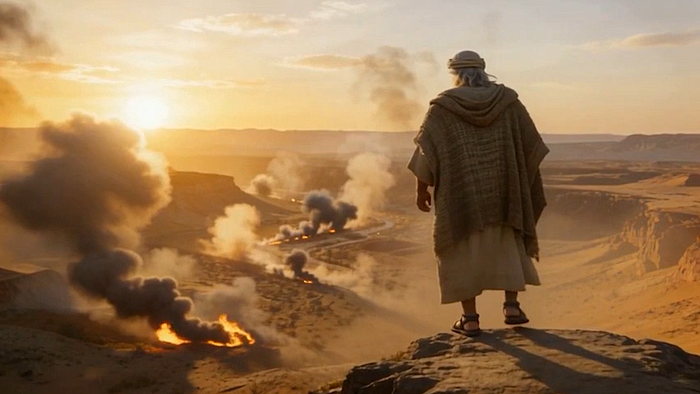
Abraham stands over the valley at sunrise, watching smoke rise from Sodom after the judgment of God has fallen.
What This Story Still Says to Us
Sodom and Gomorrah isn't a tale meant to satisfy curiosity about ruins or distant fire. It's a warning written in ash.
Don't confuse God's patience for His approval.
A delay in judgment doesn't mean sin is safe. Heaven's silence isn't a green light. God's kindness creates room for people to turn back to Him — but that room isn't unlimited.
Lot's wife remains one of the shortest warnings in all of Scripture, and one of the sharpest.
She was near mercy. She was physically led out by messengers. She heard the exact command. She walked through the city gates.
But her heart stayed turned backward.
That's why this account still lands today. A person can be inches from rescue and still be holding onto the very thing God told them to release.
For some people, Sodom isn't a literal city. It's a pattern. A hidden compromise. A relationship. A craving. A version of life God has already told them to walk away from.
And when mercy calls you out of it, there's no room to negotiate with the fire.
You run.
Key Takeaways
- God's judgment is never careless — the outcry of Sodom and Gomorrah had already reached Him.
- Abraham's intercession shows that bold faith and trust in God's justice can coexist.
- Lot's rescue reveals mercy reaching into hesitation itself and pulling people toward safety.
- Lot's wife is a warning that the heart can stay behind even after the feet have moved.
- God's patience is mercy — not permission to stay where He's calling you to leave.
- When mercy calls you out of judgment, don't look back at what you're being saved from.
Final Thought
Lot reaches the mountains breathless, shaken, and alive. Behind him, a valley reduced to ash. Ahead of him, the mercy of one more breath.
That's the weight this story still carries.
Judgment is real. Mercy is real. And when God calls someone out of darkness, the only faithful response left is obedience.
Don't look back.
Run toward mercy.
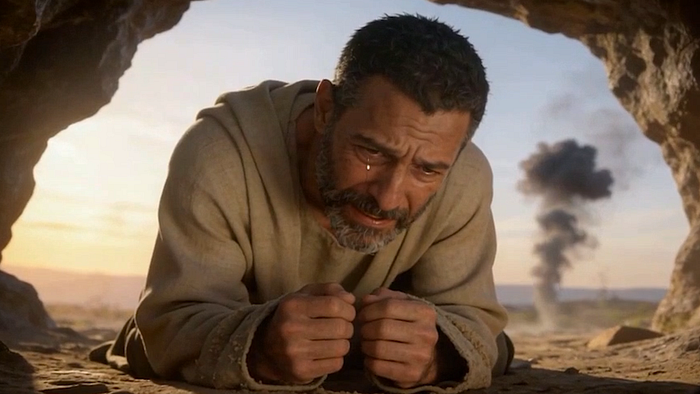
Lot reaches the mountains broken and breathless, with Sodom behind him in ashes and mercy still giving him another breath.
Watch the full cinematic Bible story on Kingdom Kutz Media:
👉 Sodom and Gomorrah on YouTube


Comments
Post a Comment